
Have you ever wondered why some businesses seem to know exactly what their customers want or launch successful campaigns ahead of everyone else? Data analytics in business plays a huge role in making informed decisions, rather than relying on guesswork. Without clear insights, companies can waste money on inefficient operations or make poor marketing plans.
The use of data analytics is not just limited to one or two departments. There is a wealth of data generated every day that can reveal hidden opportunities. The problem is, some businesses never turn that information into something useful. This blog post will explore the practical applications of data analytics across businesses and industries, and how your organization can start using that data as a strategic asset.
What is Data Analytics for Business?
Data analytics in business is the practice of collecting, organizing, examining, and interpreting data to understand past events or support smarter decisions. Understanding such data is critical to decision-making instead of relying solely on assumptions, which can be risky.
Analytics uses various information that can help tell the whole story. Website traffic, purchases, customer inquiries, marketing campaigns, and supply chain operations are just some of the data sources that are readily available within the company. When businesses analyze this information, they can find patterns, spot problems, and take appropriate actions.
There are four main types of data analytics, and each answers a specific question:
1. Descriptive analytics – What happened?
2. Diagnostic analytics – Why did this happen?
3. Predictive analytics – What is likely to happen?
4. Prescriptive analytics – What should we do next?
Why Is Data Analytics in Business Important?
Data analysis helps businesses answer important questions, such as:
- Which products sell the most? Sell the least?
- What marketing campaigns bring in the best results?
- Why are customers leaving?
- Where are costs increasing?
- What trends could affect future growth?
No matter the size of the company, data analytics is a useful tool that gives businesses an advantage.
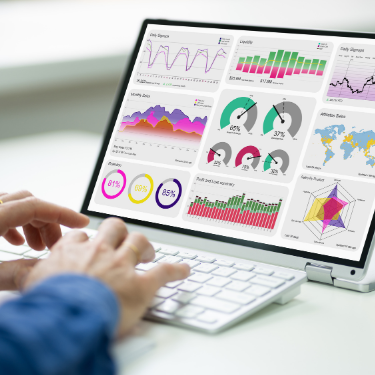
Core Applications of Data Analytics Across the Business
Data analytics is applicable in almost all components of the organization. However, the methodology is not universal. Each department utilizes different datasets, KPIs, and analytical tools, depending on its objectives. Below is a structured, comprehensive breakdown you can use for your organization.
Customer Experience
Customer analytics helps businesses understand customer behavior better. It aims to identify shopping patterns to personalize recommendations and improve customer segmentation. By studying purchasing behavior, you can learn what your customers want and how they interact with your products or services.
What to analyze:
- Purchase history
- Website activity
- Customer feedback
- Support requests
- Churn rate
Outcomes can help companies:
- Group customers based on interests
- Create personalized experiences
- Predict when customers may leave
- Improve customer loyalty
Marketing Analytics
Marketing teams use data analytics to see which campaigns work best and where to spend the budget. It also involves studying data from marketing channels to evaluate performance.
What to analyze:
- Website traffic
- Conversion rates
- Social media performance
- Email campaign results
- Advertising costs
Outcomes can help companies:
- Measure return on investment (ROI)
- Understand which channels drive the best conversions
- Get more qualified leads
- Identify emerging opportunities and shifts in demand
Sales Analytics
The sales team studies transaction data to evaluate performance and forecast revenues. It helps management track growth and improve strategies.
What to analyze:
- Monthly sales trends
- Sales by product or region
- Cart abandonment rate
- Customer buying patterns
- Salesperson productivity
- Percentage of inventory sold during a specific period
Outcomes can help companies:
- Project sales and demand
- Identify bottlenecks in the sales funnel
- Rank prospects based on the likelihood to convert
- Identify top-performing products
Operation & Financial Analysis
Operational and financial analytics aim to improve efficiency, reduce costs, and ensure smooth workflows. It combines data, such as sales, supply chain, and operating expenses for budgeting and forecasting.
This type moves beyond traditional reporting to offer predictive insights and prescriptive recommendations to improve profits.
What to analyze:
- Cash flow
- Inventory levels
- Production rate
- Profit margins
Outcomes can help companies:
- Allocate budget
- Forecast demand to avoid stockouts or overstocks
- Reduce production losses
Human Resources Analytics
Another key area for applying data analytics in business is the human resources department. Companies use HR analytics to evaluate employee performance and productivity. This enables HR teams to move beyond administrative tasks to strategic hiring and retention management.
What to analyze:
- Employee headcount
- Turnover rate
- Goal completion and performance rating
- Absenteeism rate
- Training and development ROI
Outcomes can help companies:
- Spot early signs of turnover and forecast hiring needs
- Improve hiring quality and reduce time-to-hire
- Identify high performers and development needs
- Determine potential workplace issues

Industry-specific Applications of Data Analytics in Business
Different industries use data analytics in different ways, but the goal remains the same: improve performance and make better decisions.
The following are the practical applications of data analytics in various industries.
Healthcare
Advanced healthcare systems are the key to improving patient outcomes and optimizing clinical workflows. Applying data analytics proves to be valuable in the industry by giving leaders organized reports of complex health data to form strategic and actionable insights.
Healthcare analytics can help reduce patient wait times, track population trends to prevent disease outbreaks, or better manage chronic conditions.
Common applications include:
- Predicting patient demand
- Monitoring treatment results
- Identifying high-risk patients
- Managing staff schedules
- Predictive diagnostics of health hazards
Retail and E-commerce
The retail and e-commerce industry relies heavily on analyzing raw data to make intelligent business decisions. Data analytics in business has long been practiced, and it continues to advance as the tools develop. Whether operating traditional or digital stores, businesses are able to boost sales and streamline operations by leveraging predictive analytics and real-time data.
Common applications include:
- Tracking buying trends
- Managing inventory
- Setting better prices
- Predicting customer churn
Financial Services
Banks and financial institutions use data analytics to enhance risk management and customer service. By detecting patterns, they can predict defaults, assess credit risks, and manage regulatory compliance. Banks also use algorithms to offer personalized advice, target marketing, and improve retention. Overall, data analytics help organizations make safer and faster decisions.
Common uses include:
- Fraud detection
- Credit risk analysis
- Revenue forecasting
- Investment planning
- Compliance monitoring
Manufacturing
Manufacturers use analytics to improve production and reduce downtime. Proper implementation can help factories work more efficiently and avoid costly delays.
Applications include:
- Predictive maintenance of equipment
- Quality control
- Supply chain tracking
- Waste reduction

How to Get Started with Data Analytics for Your Business
Using data analytics for your business doesn’t have to be complicated. Start simple by following these steps, and then you can build more advanced capabilities as your business or data grows.
Step 1: Set Clear Goals
First, decide what you want to improve. Instead of analyzing everything all at once, focus on one thing at a time. Do you want to increase customer retention, lower operating expenses, or improve sales forecasting? Clear goals make it easier to focus on the right data.
Step 2: Gather Your Data
Most of the data that you need is already available in your system. Find where it is stored and bring it together to create a strong foundation for analysis. Business data can be found in Customer Relationship Management (CRM) systems, website analytics platforms, accounting software, and sales tools.
Step 3: Clean and Organize Your Data
Remove inaccuracies, duplicates, and missing information that can lead to incorrect conclusions.
Step 4: Choose the Right Tools
Start with tools that match your current needs. Spreadsheets are good for basic analysis, while cloud-based analytics platforms are for more advanced analysis. Visualize data by using charts to find patterns.
As your business grows, you might need more scalable solutions, such as Power BI, that can handle larger datasets, automate reporting, and integrate data from multiple sources.
Step 5: Interpret and Act
Turn findings into an action plan. Present data in a way that stakeholders can understand to make informed decisions.
Conclusion
Implementing data analytics can help you transform your business into an insight-driven organization. Clean, organize, and visualize your data to see hidden gems that can drive your business to success. Don’t worry about sophisticated setups; you can start small using basic spreadsheets or dashboards.
Businesses that use data consistently are better prepared to adapt, grow, and stay competitive.
Are you ready to make data work harder for your business? Partner with a trusted data consultant today so you can focus more on your goals. The experts at Level Up Your Data can help transform raw data into clear and practical strategies with measurable results.
Frequently Asked Questions
- What tools are commonly used for data analytics in business? Companies often use Microsoft Excel, SQL, Python, or R for analysis. Familiarity with visualization tools like Power BI and Tableau is helpful for presenting data better. Lastly, you need effective storytelling to explain technical findings to non-technical stakeholders.
- How do I measure the success of my data analytics efforts? First, ensure the project aligns with your Key Performance Indicators (KPIs). If your implemented actions or insights helped you reach a goal or solve a problem, your initiatives are effective. Always remember that the focus is on results and not on dashboards or presentations.
- Why should I hire a data consultant for my business? If your business has growing amounts of data but struggles to organize it, a data consultant can help systematize everything. They will take care of the technical details so you can focus on your business and make informed decisions.